
Core Concept: Leadership Transitions
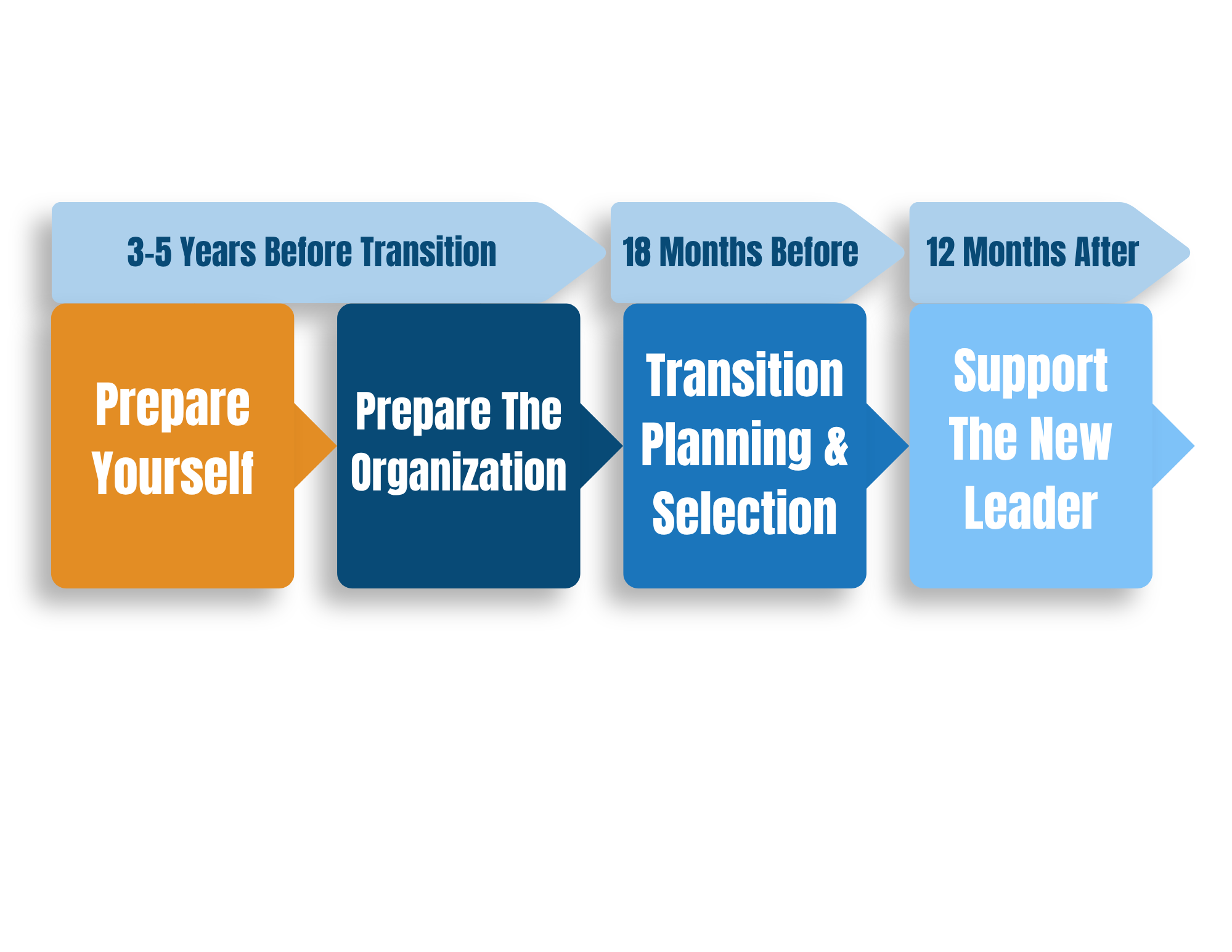
Leadership Transition Timeline: A carefully planned and sequenced leadership transition can not only protect an outgoing leaders legacy, it can build organizational health and resilience.
Across rural Appalachia, many community nonprofits and foundations are approaching a major shift. As the average age in rural communities continues to climb, so does the age of the leaders who serve them, and many long-tenured executives and leaders are now nearing the end of their careers. How these leaders and their organizations handle that handoff will determine whether the communities that depend on them stay supported. Organizations that begin planning early can use this moment to honor their departing leader, strengthen the organization, and develop leadership at every level.
What Is a Leadership Transition?
A successful leadership transition is much more than a successful hiring process. At its best, it is a process of leadership and organizational development that positions the organization for future success and builds the leadership it needs to carry out its mission and vision. A thoughtful transition also allows the departing leader to complete their work, prepare for what comes next in their own life, and leave a lasting legacy. While this blog and associated assessments and checklists focus primarily on executive leadership transitions, the same framework applies to leadership transitions at large. It can be useful and guide the departure of anyone in a leadership position, such as a COO, CPO, CFO, or other managers and supervisors.
Why Do They Matter?
Leadership transitions are a natural part of every organization's life, yet they are often the least understood and most neglected, which means they hold the greatest potential to either set an organization back or help it flourish.
A transition sets off major change inside an organization, as roles, relationships, decision-making, and the organization's sense of itself all move at once. Like any living system, the organization must keep its footing through that change, even as conditions around it continue to evolve. While transitions are often seen as risky and fraught, they need not be. With proper planning and foresight, a transition can become a time to clarify strategic direction, recommit to the mission, and overall improve the organization's health. Beginning early also gives the organization room to build a long-term transition plan alongside an emergency plan, so it is prepared if a key leader leaves unexpectedly or faces a crisis.
Drawing on our extensive experience working alongside rural leaders at all stages of their development, RSP has identified four key stages of an effective leadership transition. Attending to these stages carefully and in a timely way is especially important for organizations serving rural communities, where many residents rely on critical services that cannot afford to be interrupted.
Four Stages of Leadership Transitions
The four stages of an effective leadership transition begin early and extend beyond the actual departure date of a leader. These types of transitions are much more than a scouting and hiring process. With enough foresight, a leadership transition can be a years-long process that sets up both the organization and the departing leader for future success.
1. Prepare Yourself (3-5 Years Before Transition)
This stage, part of an often-neglected process, is rarely attended to – but it is the most important, as it sets the timetable for the eventual transition and sets the whole process in motion. As noted in our previous post, effective participatory leaders’ reflective and wellness practices are of the utmost importance, keeping them physically, emotionally, and mentally engaged in important work. Therefore, taking the time to prepare oneself financially, personally, professionally, and emotionally for the transition will set the tone for the next chapter and help to plan one’s final years of leadership intentionally.
In a rural context, this can be especially important and tricky, as rural leaders often live in the areas where they work, and their personal identities are deeply connected to the work, and the people and places they serve. Taking these steps to prepare oneself early helps to begin the process of untangling one’s identity and constructively disengaging from the organization.
2. Prepare The Organization (3-5 Years Before Transition)
This next stage of an effective leadership transition process generally overlaps with the process of preparing oneself to transition. As one takes the time to step back and prepare oneself for departure, it also benefits everyone involved to set time aside to also assess and prepare the organization for transition.
This is an excellent time to step back, assess the overall health of the organization, and clarify what needs attending to in the next crucial period. During this time it is important to strengthen the organization and prepare it for an eventual leadership transition by continuing to encourage empowered participation and the development of leaders inside the organization; by assessing and updating the strategic plan, as needed; by attending to the organizational structure and systems that may be necessary in this new phase; and by building board and staff capacity as roles and responsibilities begin to shift to meet the moment. All these components contribute to an effective leadership transition and to the resilience of the organization at large.
This is important for rural leaders to consider, as rural organizations are often small and operating margins are slim. Attending to these items early and often helps ensure the organization can continually adjust to external conditions as it undergoes major internal changes.
3. Transition Planning & Selection (18 Months Before Transition)
When people think about leadership transitions, this is often the only stage they consider. Yet this stage is not simply about replacing the current leader. It is about the board, staff, and other key stakeholders coming together to determine what the organization and the rural communities it serves will need from the next leader.
The first two stages lay the groundwork for a sound, long-term leadership decision. With a clear picture of the organization's finances, structure, staffing needs, and future direction, a transition team designated to manage the transition process will know what to ask of potential candidates and be able to clearly communicate the transition process to staff – maintaining trust and reducing uncertainty in the process overall. And because those earlier stages invest in developing leaders and broadening participation, the next executive or other leader may already be within the organization and ready to step into the role. This stage focuses on using a consistent and transparent process to find an ideal candidate and identifying the leadership qualities that will best serve the organization's future, while also recognizing the strengths, experience, and institutional knowledge already present on the team.
Attending to the previous two stages of work is especially important for rural organizations where the potential pool of local new hires may be limited and institutional knowledge and memory come at a premium. It can often be easier to develop current staff into an executive or other leadership role and back-fill the vacant position as needed.
4. Support The New Leader (12 Months After Transition)
By now the hand-off has been made, and the new leader, board, staff, and community members are adjusting to the change. Again, as part of an often-neglected process, this final stage is just as important to ensuring the sustainability of the organization and protecting the legacy of the outgoing leader.
Similar to any other new positions on-boarding process, the new leader needs all the support they can get from the transition team, board, staff, and community members as they step into the role and assume the responsibilities of leadership. The best person to offer this support is the departed leader, who can intentionally transfer their leadership, supply the relationships and knowledge, help cultivate realistic expectations, and support the organization’s new leader as needed.
In a rural community or in organizations that serve rural areas - where social circles are small and people are used to seeing the same faces year over year - this stage is important to ensure that the outgoing leader builds healthy boundaries with the position they held and steps fully out of the role – making room for the new leader to step in fully.
Conclusion
Attending to each stage of this process in a timely manner ensures that a leadership transition is more than a recruitment and hiring process. It is a process that strengthens the overall organization and reinforces its purpose and ability to carry out the mission for years to come. Because a leadership transition sets off a major internal structural shift, giving it thoughtful, intentional attention is what allows an organization to keep its footing, and to maintain and improve its health, in an ever-changing environment. Taking the time early to assess one’s own readiness and organizational readiness is the first step in an important process that can contribute to the organization’s health and resilience overall. Beginning the process early also ensures the organization has both a long-term transition plan and an emergency plan for key leadership positions, so that it can keep operating effectively whether a transition unfolds over several years or arrives unexpectedly.
The assessments and checklists linked throughout this post are intended to help you get a rough idea of where you and your organization stand, and to ensure that any eventual transition is grounded in reality and carefully sequenced.
